
How our students succeed*
92%
passed their exam after using Study.com
Prepare for your NES Exam
What is the NES test?
NES, or National Evaluation Series, is a series of exams for teacher certification. Candidates may also see the NES identified as the NES test or NES exam. NES tests are designed to assess prospective teachers on professionally accepted subject standards, including Common Core State Standards. The purpose of the NES testing is to ensure teachers have the knowledge they will need to meet stringent classroom requirements and expectations, albeit as entry-level educators. Each state has its own requirements for NES testing and certification.
There are several types of tests in the National Evaluation Series. Content area assessments cover material commonly found in grades K-12. Professional knowledge assessments quantify a teacher's ability to transfer their knowledge to students; i.e., the ability to teach. Essential academic skills assessments focus on reading, writing, mathematics, and technology, which are considered fundamental skills for an educator to have to be a successful teacher.
Which states accept the NES test for certification?
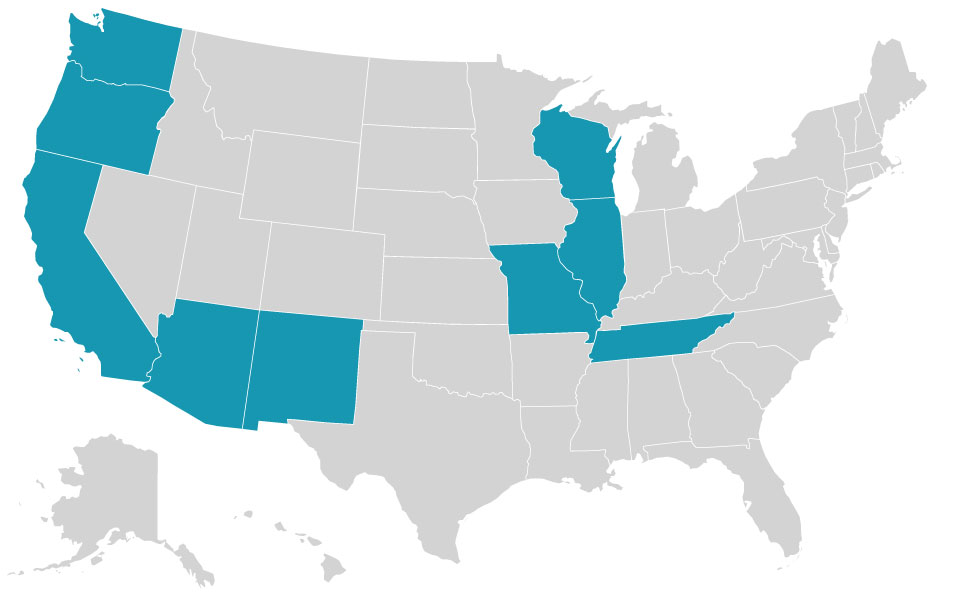
Not all states accept NES certification. Additionally, each state that does accept NES has varying standards for certification. It is important to check the specific state's NES testing requirements, including what role and conditions require the certification. The following states currently accept NES test scores for certification: Arizona, California, Illinois, Missouri, New Mexico, Oregon, Tennessee, Washington, Wisconsin
What is on the NES test?
The NES exam covers a wide variety of information, with each NES test containing information specific to a topic that K-12 educators are expected to understand. There are more than 40 different tests under seven topic areas that cover early childhood, elementary, middle, and secondary education.
Essential Academic Skills
The NES Essential Academic Skills exams test a candidate's skills and knowledge in reading, writing, mathematics, and technology literacy. The following table provides details on the topics, including number and type(s) of questions, time allotted, and a brief description of the topic.
| Name | Number of Questions | Type | Time | Contents |
|---|---|---|---|---|
| Reading | 45 | Multiple Choice | 60 minutes |
|
| Writing | 36 | Multiple Choice, 1 Written Assignment | 75 minutes |
|
| Mathematics | 45 | Multiple Choice | 60 minutes |
|
| Technology Literacy | 36 | Multiple Choice | 45 minutes |
|
Assessment of Professional Knowledge
The NES Assessment of Professional Knowledge exams test a candidate's professional skills and knowledge for elementary and secondary education. The following table provides details on the topics, including number and type(s) of questions, time allotted, and a brief description of the topic.
| Name | Number of Questions | Type | Time | Description |
|---|---|---|---|---|
| Elementary | 100 | 100 Multiple Choice, 1 Case Study, 1 Work Product | 180 minutes |
|
| Secondary | 100 | 100 Multiple Choice, 1 Case Study, 1 Work Product | 180 minutes |
|
Elementary Assessments
The NES Elementary Assessments exams test a candidate's skills and knowledge in early childhood education, including birth to pre-kindergarten and ages 3 to 8, elementary education, and elementary reading instruction. The following table provides details on the topics, including number and type(s) of questions, time allotted, and a brief description of the topic.
| Name | Number of Questions | Type | Time | Description |
|---|---|---|---|---|
| Early Childhood Education | 150 | Multiple Choice | 180 minutes |
|
| Early Childhood Education (Birth-PreK) | 80 | Multiple Choice | 105 minutes |
|
| Early Childhood Education (Ages 3-8) | 100 | Multiple Choice | 120 minutes |
|
| Elementary Education Subtest 1 | 75 | Multiple Choice | 90 minutes |
|
| Elementary Education Subtest 2 | 75 | Multiple Choice | 105 minutes |
|
| Essential Components of Elementary Reading Instruction | 150 | Multiple Choice | 180 minutes |
|
Middle Grades Assessments
The NES Middle Grades Assessments exams test a candidate's skills and knowledge in English language arts, general science, mathematics, and social science. The following table provides details on the topics, including number and type(s) of questions, time allotted, and a brief description of the topic.
| Name | Number of Questions | Type | Time | Description |
|---|---|---|---|---|
| English Language Arts | 150 | Multiple Choice | 180 minutes |
|
| General Science | 150 | Multiple Choice | 180 minutes |
|
| Mathematics | 150 | Multiple Choice | 300 minutes |
|
| Social Science | 150 | Multiple Choice | 180 minutes |
|
Secondary Assessments
The NES Secondary Assessments exams test a candidate's skills and knowledge in biology, business education, chemistry, earth and space science, ELA, family and consumer sciences, general science, history, mathematics, physics, and social science. The following table provides details on the topics, including number and type(s) of questions, time allotted, and a brief description of the topic.
| Name | Number of Questions | Type | Time | Description |
|---|---|---|---|---|
| Biology | 150 | Multiple Choice | 180 minutes |
|
| Business Education | 150 | Multiple Choice | 180 minutes |
|
| Chemistry | 150 | Multiple Choice | 225 minutes |
|
| Earth and Space Science | 150 | Multiple Choice | 180 minutes |
|
| English Language Arts | 150 | Multiple Choice | 180 minutes |
|
| General Science | 150 | Multiple Choice | 180 minutes |
|
| History | 150 | Multiple Choice | 180 minutes |
|
| Mathematics | 150 | Multiple Choice | 300 minutes |
|
| Mathematics (middle grades and early secondary) | 120 | Multiple Choice | 255 minutes |
|
| Physics | 150 | Multiple Choice | 225 minutes |
|
| Social Science | 150 | Multiple Choice | 180 minutes |
|
K-12 Assessments
The NES K-12 Assessments exams test a candidate's skills and knowledge in art, Mandarin, computer science, English as a second language, French, German, gifted education, health, music, physical education, school counselor, school library media specialist, Spanish, and special education. The following table provides details on the topics, including number and type(s) of questions, time allotted, and a brief description of the topic.
| Name | Number of Questions | Type | Time | Description |
|---|---|---|---|---|
| Art | 150 | Multiple Choice | 180 minutes |
|
| Chinese (Mandarin) | 100 | Multiple Choice, 1 presentational writing, 1 presentational reading | 180 minutes |
|
| Computer Science | 100 | Multiple Choice | 120 minutes |
|
| English to Speakers of Other Languages | 150 | Multiple Choice | 180 minutes |
|
| French | 100 | Multiple Choice, 1 presentational writing, 1 presentational reading | 180 minutes |
|
| German | 100 | Multiple Choice, 1 presentational writing, 1 presentational reading | 180 minutes |
|
| Gifted Education | 150 | Multiple Choice | 180 minutes |
|
| Health | 150 | Multiple Choice | 300 minutes |
|
| Music | 150 | Multiple Choice | 180 minutes |
|
Physical Education | 150 | Multiple Choice | 180 minutes |
|
| School Counselor | 150 | Multiple Choice | 180 minutes |
|
| School Library Media Specialist | 150 | Multiple Choice | 180 minutes |
|
| Spanish | 100 | Multiple Choice, 1 presentational writing, 1 presentational reading | 180 minutes |
|
| Special Education | 150 | Multiple Choice | 180 minutes |
|
Take the NES exam with confidence
Try our test prep resources risk-free today and achieve the test score you want
NES test scores
NES test results are based on a standardized scoring methodology. Each test score is comprised of a raw score based on the number of questions answered correctly. That raw score is converted to a standardized score ranging from 100 to 300. NES has set a national benchmark score of 220, but each state has its own NES passing score. NES tests that only contain multiple-choice questions will provide the score at the test site, with a follow-up score report provided within two weeks of taking the test. NES tests with constructed-response assignments will provide score reports within four weeks of testing.
The score report will provide a score based on the number of questions answered correctly (multiple choice) and the interpreted score for constructed-response questions. The report will provide a breakdown of how each type of question contributed to the candidate's score. Additionally, the report will break down how the candidate performed in each topic area within the test, including how many points were earned on the constructed-response portion, if applicable. The score report will also tell the candidate where the score reports were sent.
What is the NES test score range?
NES exams are part of a standardized testing system. As such, NES uses a standardized grading scale that ranges between a minimum NES test score of 100 and a maximum NES test score of 300. There is also a national benchmark score of 220. While NES sets a standardized scoring system and benchmark, each individual state has the authority to set its own requirements for a passing score. While a candidate should always strive for the highest possible score, it is important to understand the specific state's requirements when sitting down to take the exam. Each state publishes these test score standards, and they are available to the public.
What score do you need to pass the NES test?
The NES benchmark score is 220. Each state has its own passing score. States publish passing scores for individual tests and subtests and are listed below. Generally, a candidate must pass all subtests to successfully pass a test.
| State | Passing Score |
|---|---|
| Arizona | 240 |
| California | 220 |
| Illinois | 220 |
| Missouri | 220 |
| New Mexico | 220 |
| Oregon | 220 |
| Tennessee | 220 |
| Washington | 240 |
| Wisconsin | 240 |
How hard is the NES test?
The NES test is no different than any other certification exam in that its perceived difficulty is specific to the individual candidate's level of education, quantity and quality of studying, and test-taking abilities. The majority of NES exams are multiple-choice questions. Some may find these questions more or less difficult than others, depending on the topics being tested. In addition, some NES exams have constructed-response questions, requiring a candidate to develop and write a suitable response in a pre-defined amount of time. These types of test questions may be easier for some candidates and more difficult for others. Finally, foreign language tests require a speaking assignment. In addition to the material that must be learned for a speaking assignment, some individuals may be challenged with the requirement to verbalize their response to questions on the exam.
How long does it take to get NES scores?
There are two NES test types, each with different time periods to receive score reports. NES tests that only contain multiple-choice questions will provide the score at the test site, with a follow-up score report provided within two weeks of taking the test. NES tests with constructed-response assignments will provide score reports within four weeks of testing.
How long are NES test scores good for?
NES test scores are available in your account on the NES test site for two years. See individual state requirements for the ability to use NES test scores beyond a specified period.
View all available NES resources
NES Exams
Essential Academic Skills




Secondary Assessments












Professional Knowledge


K-12






Elementary










Preparing for the NES tests
The most effective way to prepare for the NES test is to study available materials for the specific test being taken. The most effective means to prepare includes reading the available material, taking practice tests, and allotting adequate time for study, review, and testing.
How do I study for the NES test?
As the candidate begins to study and prepare for the NES test, it is important to keep a few things in mind.
- The candidate should confirm the tests/subtests they are taking.
- The candidate should know detailed information and expectations of each test/subtest and sufficiently understand the material each test covers. Similar subjects appearing on different subtests may cover different content.
- One of the best methods for passing the test, once the candidate has studied the available materials, is to take NES practice tests. These practice tests are generally available as part of an NES test prep course, which include additional prep materials such as NES study guides and information.
How do I prepare the day of the NES test?
Being ready on the day of the NES test is simple yet important. As candidates will come to understand from reviewing these study materials, each exam takes a considerable amount of time and effort and requires extensive preparation. Therefore, to ensure all that hard work is effective on the day of the test, it is important to be fully prepared leading up to test-time.
Test-Day "Dos"
- Get adequate sleep the night before the test
- Allow for adequate time to get ready and arrive at the test center early
- This includes leaving time for check-in
- Bring photo identification
- State-issued driver's license
- Passport (unexpired)
- Government-issued photo ID card
- Wear layers of clothing to be ready for warm or cold temperatures
- Clothing and shoes should be comfortable
Test-Day "Don'ts"
- Do not bring any prohibited items to the test center
- Study notes
- Cell phones
- Calculators
- Food/beverages
- Candidates should be ready to leave prohibited items in a car or at home in the event the test center does not offer lockers.
Check out our most popular NES prep courses!
NES-specific preparation courses for every subject
NES test registration
Registering for the NES test is an important step toward setting a timeline for studying and taking the test. Tests are offered at specific times in each test center and a candidate should consider this when determining how far in advance to schedule the NES test.
How do I register for the NES test?
Registering for the NES test is straightforward. The candidate should perform the following steps:
-
Create an account on the NES website.
-
Register for the NES test using the online registration form.
-
Schedule the NES test using the test center locater and identifying available dates and times.
What are the NES test dates and locations?
Test dates are generally available year-round, Monday through Saturday, except on certain holidays at locations throughout the United States. The NES test requires making an appointment at a test center convenient to the candidate. Test center information, including dates and times, is located on the NES website.
How much does the NES test cost?
Most NES tests have the same cost, currently $95. There are exceptions to this. The exceptions are for tests that have multiple subtests, each with specific costs, detailed below. When considering the cost of taking the NES tests, it is important to factor in the cost of NES study guides and other key resources to help the candidate successfully prepare for the NES tests.
NES Essential Academic Skills tests
As discussed in the prior section, NES Essential Academic Skills tests have four subtests. Candidates may take the tests on separate days or multiple tests in a single day. A single test has a $50 fee, but candidates that opt to take multiple tests on a single day receive discounted fees. Two tests taken at the same time have a total cost of $75, three tests have a total cost of $100, and all four subtests have a total cost of $125 if taken at the same time.
NES grade and subject tests
The twelve tests that make up Secondary Grade tests and the fourteen tests that make up K-12 Subject-Area and Specialization tests each have a $95 fee, regardless of how long each test takes to complete. Elementary tests each contain two subtests. Candidates may take each subtest separately for $50 each or take both subtests at the same time and pay $95.
What accommodations are available for the NES test?
Candidates that have documented physical, learning, or cognitive disabilities or who do not speak English as a primary language may be eligible for alternative testing arrangements to accommodate their specific requirements. The table below provides more information on individual needs for alternative testing arrangements.
| Accommodation | Eligibility Requirements |
|---|---|
| Extra Time | Applicants that do not speak English as a primary language, require breaks for medication, or have a physical disability. Potential for up to an additional 50% time to take the individual exam. |
| Tools | Candidates with a medical condition that requires special computer or peripheral equipment, such as a trackball mouse. |
| Access to Medical Devices | Many medical devices, such as an EpiPen or mobility assisting devices, are allowed without special permission. The Pearson VUE website contains a listing of medical devices requiring permission. |
| Additional Support Professionals | Candidates requiring interpreters may request permission for such assistance. |
| Test Format Changes | Candidates requiring an alternative test format, such as Braille, may request alternative arrangements for testing. |
Frequently Asked Questions
How often can I take the NES exams?
There is no defined limit to how often a candidate may retake the NES test or any of the subtests. The only requirement for retaking the NES test or subtests is to wait 30 days from the date of the previous exam before taking a retest.
Who makes the NES tests?
NES tests are a series of teacher certification exams created by the Evaluation Systems group of Pearson Education. Pearson also operates proctored test centers marketed under the name Pearson VUE. Candidates may schedule and take the Pearson NES test at Pearson VUE test centers.
Which tests are comparable to the NES exams?
Each state has different requirements for certification and testing. Some states have more than one certification program, allowing a candidate to select the one that is most suitable. For example, many states allow candidates to certify using Praxis, developed and administered by Educational Testing Service (ETS). In some states Praxis has been the standard, and in recent years NES has become an alternative to Praxis.
Meet Our Experts
Bryan McMahon, M.A. is a high school biology and special education teacher in New Jersey with over 14 years of teaching experience. He has hundreds of hours of experience tutoring aspiring teachers to take the CSET/CBEST exam suite. He has successfully passed the science and special education Praxis exams. Bryan completed a B.S. in Education from Seton Hall University and an M.A. in Teaching from Mangrove College.

Bryan McMahon
Jeryl-Ann Asaro, M.Ed. is a retired teacher with over 19 years of experience in all levels of education, from the elementary classroom to post-graduate workshops. She is currently a Clinical Intern Supervisor at The College of New Jersey in Ewing Township, where she observes and instructs student teachers. She has passed the Praxis exam and has extensive experience assisting students and adults prepare for a variety of standardized tests. As an educator and educational leader, she is committed to excellence by empowering collaboration, fostering innovation, and nurturing achievement. Jeryl-Ann completed a B.A. in English Education at Montclair State University and a Master's degree in Education at Marygrove College.

Jeryl-Ann Asaro
Kasey Sindel, Ph.D. has worked in education for over 11 years. She began her career as an Education Specialist, developing life science lessons for grades 6-12. She currently works as a middle school science teacher with a focus on the Earth, plant, and chemical sciences. She earned her Ph.D. in Instructional Leadership from Lindenwood University. She also holds a Master's degree in Science Education from Webster University and a Master's degree in Curriculum & Instruction from the University of Missouri-St. Louis.

Kasey Sindel
What our students are saying
Your courses on the Praxis exams are on point! Highly organized, concise, and entertaining. I never need to search long for the information I'm looking for. The videos are fun to watch and educational.

Tyson C.
I am a visual learner and the videos work very well for enhancing my learning capabilities.

Tami S.
I always received poor grades in History. Study.com really helped me learn the material and I received my highest CLEP score ever!

Sharla W.
Passed
I am getting quality, in depth videos that make sense! This is the best study material that is out there for the CSETs right now, thats why I had to get this material right away! I am confident I will be able to pass the Science CSETs now!

Bekah Y.
I am a 7th-grade teacher and often use it for language arts and world history. The students find it quite engaging. On a professional note, it has helped me pass 2 out of the for 4 Single Subject CSET English Exams! Now I am using it to help me pass the last 2 subtest exams.

Scott S.
Passed 2 CSET English Exams
I am five classes shy of getting my undergrad. Every DSST and CLEP course I've studied on this site, was successfully passed. The material aligns well with the actual test. Am thankful for the short but great videos and transcripts. I just recently saw that flashcards were offered as well. The site has gotten better over the years I've visited. Thank you.

Terry D.
It was difficult trying to find all of the resources I needed in one place. I could find a textbook that had the information but no practice questions, or find "FTCE" specific products that would have practice questions but the written lessons would be lacking. I could find videos on parts of the material but not others. I really enjoyed the Study.com videos with the text transcripts and having quizzes at the end that really helped me check to see how well I understood the material.

Jamilet Z.
Passed
I feel confident going into the GACE test now. The videos are short and quick, but informative. The videos and lessons align with the topics that are needed for the course.

Deborah S.
Study.com has helped prepare me to take the GED exam. I have only been using this site for less than a month and I have already passed one of four tests for my GED.

Sharnette L.
Passed
I used Study.com to prepare for a Praxis Test. I had not taken any of the 4 courses which were covered on the test. Studied intensively for 12 days - finished the Study.com course AND I passed the Praxis.

Shelly G.
Passed Praxis
I am a 40 year old that was studying for the Praxis. It has been a VERY long time since i had to study for anything and study.com made the material SO digestible and accessible. It was so well organized that it eased my anxiety so much! I didn't get through the entire course (but that's on me!) but what I did helped me SO much - I would definitely recommend it in the future to anyone, even my own kids!

Jennifer G.
The information seems to be there. It's a great resource for study. I will be sure to purchase the actual NES practice exam to get a feel of their format. Love that Study.com can help me learn about all the material on the test. I enjoy Study.com mostly because all the information is here and I don't need to go searching in other places.

Mitchell G.
I have utilized study.com to study for my aPHR certification. I am on the last lesson and I really enjoy the video format because it is not so strenuous as reading. I like the notes feature.

Sam H.
I wasted a lot of time searching for the exact and precise information on Google prior to Study.com. Study.com has the exact information you need to pass the TExES science exam. You can rewind the videos and you can always email instructors if you do not understand something-they reply right away. Everything on Study.com helped me pass my exam. I did all the quizzes and practice exams. I have no doubt I will use this source again once I start teaching. I will also recommend this website to anybody that needs it.

Ana G.
Passed
Try it risk-free
Try it risk-free
today! No obligation, cancel anytime.
Study.com has been featured on:

*Percentages come from surveys of over 300 test prep customers