
Written by Alina Lehtinen-Vela. Copy editing by Grant Policar.
Educators across the nation may be faced with a growing teacher shortage crisis as more and more are considering a career change following the resumption of federal student loan repayments in October 2023.
The earlier pause in payments provided temporary relief to 43.6 million borrowers, but - after its end in October - many people, especially teachers, are facing substantial debts in an increasingly difficult financial environment.
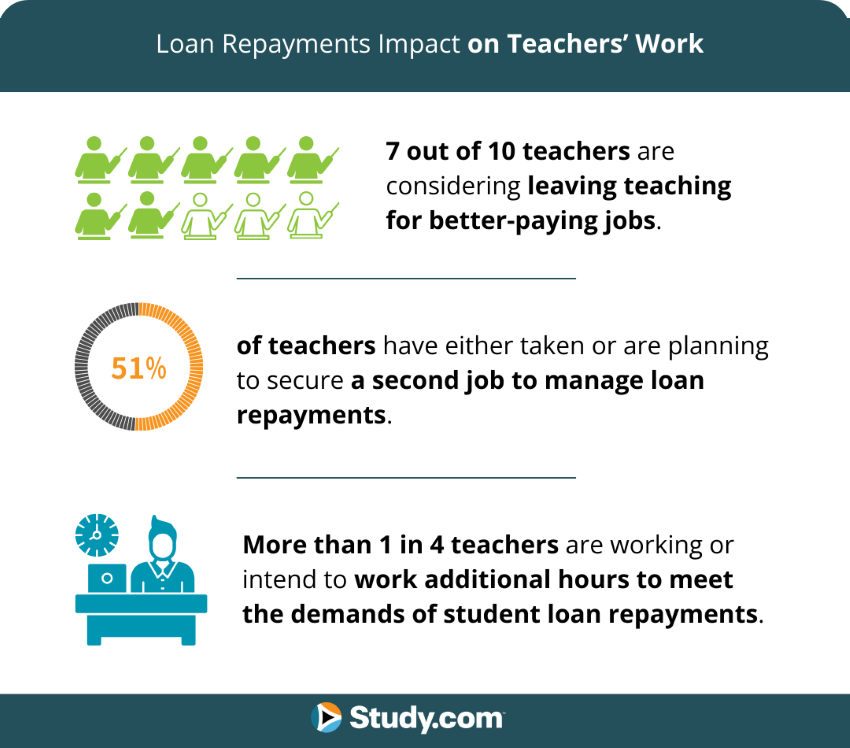
People heavily burdened with debt are 2.4 times more inclined to leave their jobs. This data is supported by a Study.com survey that examined Student Loan Repayments Impact on Budgeting and Spending which shows that 71% of teachers are contemplating a career change due to the financial strain brought on by the resumption of student loan repayments.
Experts' Corner
Teacher Certification Advisor Olivia explains how student debt is affecting the teacher retention crisis.
Methodology
The Study.com Student Loan survey was conducted digitally throughout the United States on October 24, 2023, by Pollfish. The survey engaged 500 teachers, all managing federal student loan debts.
Supporting data for this article comes from the ADP Research Institute, United Press International, the National Education Association, US Bank, Fortune, and EdSurge.
 |
Teacher Shortage Crisis
More than half of the nation's school districts are experiencing teacher shortages. The Nevada State Education Association reported almost 2,300 unfilled teacher positions across the state's 17 school districts as of December.
In Florida, the 2022-23 school year saw almost 4,450 teaching vacancies, with the Department of Education reporting that 10% of courses were taught by teachers not certified in the appropriate field.
Additionally, burnout and stress among teachers is contributing to their consideration of career changes and pushing many out of the profession. The Study.com survey shows that more than half of teachers report increased stress affecting their relationships, and 54% have experienced serious disagreements with family members due to the strain from student loan repayments.
Teacher pay, work conditions and lack of appreciation are additional factors impacting teacher retention. Alex Marrero, superintendent of Denver Public Schools, attributes the shortage partly to societal undervaluing of educators, leading to teachers leaving for more flexible work opportunities elsewhere. This situation is compounded by competition with other sectors that offer higher compensation and hybrid work opportunities.
The Financial Struggles of Educators
Teachers typically face a greater debt burden as a percentage of their income. The Study.com survey shows that 25% of teachers have more than $40,000 in federal student loan debt and 23% have between $30,000 and $40,000.
Moreover, the National Education Association reveals an even more disheartening picture: nearly half of all teachers borrowed an average of $55,800, with the debt burden disproportionately affecting younger teachers—two-thirds of whom have over $65,000 in student loan debt.
Teachers are also facing other economic challenges. Despite the Consumer Price Index (CPI) dropping to 3.2% in October, it remains notably above the Federal Government's long-term target of 2%. Stagnant teacher salaries haven't kept pace with inflation rates either, resulting in a significant decrease in real income over the past decade. This disparity in pay and rising costs have led to an alarming trend - teachers are increasingly unable to afford housing in the districts they work.
How Teachers' Finances Shape Their Careers
The hard financial situation has prompted a shift in teachers' work dynamics.
Prior to the resumption of loan repayments, an estimated one in five teachers already had second jobs. Study.com found that this number is increasing: 51% of teachers have either already taken up or are planning to secure a second job to manage their loan repayments.
On top of this, 1 in 4 teachers have already taken on extra hours to supplement the added expense of repayments.
This data underscores the urgent need for solutions to alleviate financial stress among educators, ensuring they can continue teaching. Addressing teacher debt is not just about supporting individual educators; it's about investing in the quality of education for future generations.